Yazy the yatzy dice game
- 4.7
- Rating
- 1.00M
- Installs
- Free
- Price
 Analysis by App-foxy
I spent time with Yazy as a quick board game rather than treating it like a large, feature-heavy gaming platform. That distinction matters. Its appeal is the familiar rhythm of rolling dice, choosing what to keep, and deciding whether to protect a safe score or chase a better combination. I found it easy to understand almost immediately, which makes it a natural choice for short breaks, casual play, or anyone who enjoys dice games without wanting a long tutorial.
It is a free game from FIOGONIA LIMITED, rated for Everyone, and it sits in the board category. The public reception is strong, with a 4.7 average from around 41 thousand ratings and more than a million installs. Those figures suggest that the basic idea has reached a broad audience, but they do not replace personal judgment: the game works best if you enjoy repeated rounds built around probability, patience, and small decisions.
My overall impression is positive, with one important qualification. Yazy is most enjoyable when I treat each round as a compact mental exercise, not as a deep strategy campaign. The rules are approachable, the turns move quickly, and the familiar dice format makes it easy to return after a few days away. On the other hand, players looking for a rich competitive ladder, a large collection of modes, or a detailed long-term progression system may find the experience too focused.
You May Also Like

 Blood Strike: 2.5 Anniversary
Blood Strike’s Loadouts Turn Every Drop Into a Tactical Gamble
A close look at Blood Strike’s custom loadouts: how fast access to signature weapons reshapes its battle royale rhythm, rewards preparation, and narrows the gap between fights.

 Pandora - Music & Podcasts
Pandora’s Music Is Easy to Start, but Harder to Recover
Pandora’s strength is its low-effort path from a seed to a station. Its weak spot is how much confidence it asks you to place in connection, setup, and quiet recovery.

 8 Ball Pool
 Is Built on Rivalries, Rematches, and Routine
A close look at the rivalries, rematches, shared routines, and unanswered safety questions that turn a quick pool match into a persistent mobile community.

 Samsung Music
’s Quiet Strength Is Playing What You Already Own
Its reach comes less from spectacle than from dependable access to a personal library. That simplicity is both the app’s strongest retention engine and its ceiling.

 AccuWeather: Weather Radar
AccuWeather Review: A Quick, Clear Forecast for Everyday Decisions
For everyday plans, the best forecast is the one you can understand quickly. AccuWeather makes rain timing, radar, and local conditions easy to act on, with a few trade-offs.

 Hill Climb Racing
Why Hill Climb Racing Still Turns Crashes Into One More Run
A tiny car, a bumpy hill and one more upgrade: Hill Climb Racing keeps resurfacing because its simple chaos makes every near-miss feel personal.
More From Our News Desk



How the dice format feels in everyday play
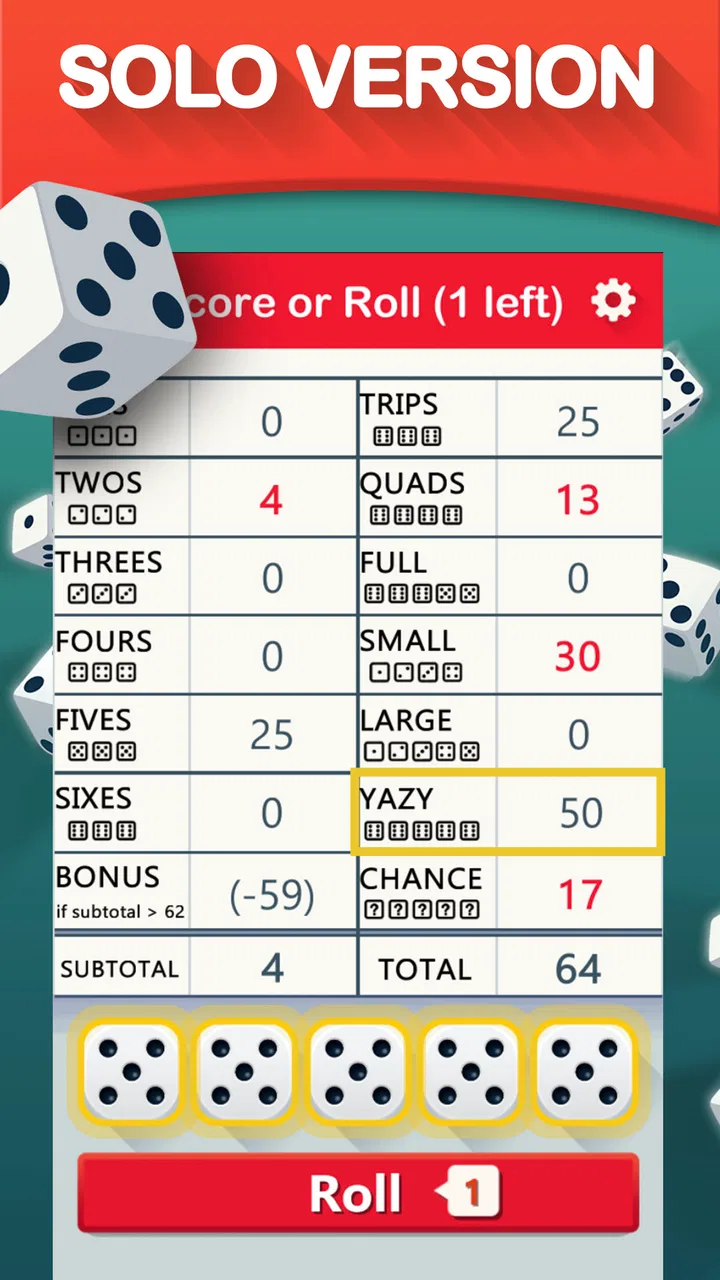
The first thing I noticed is how little preparation the game demands. I do not need to memorize a complicated ruleset before starting. The central question is always understandable: after a roll, which dice should I keep, and which should I risk rolling again? That simplicity is the reason I can imagine opening it while waiting for a train, taking a short break between tasks, or relaxing at home without committing to a long session.
A typical everyday use case is a few rounds during a coffee break. I can begin with a clear goal, make several quick decisions, and stop without feeling that I have abandoned a large adventure or left a complicated team activity unfinished. The format also suits people who like games that reward attention without demanding constant concentration. I can play casually, but careless choices still have consequences.
The game’s board-game identity is important here. This is not a reflex challenge where speed determines success, and it is not built around exploring a large virtual world. The enjoyment comes from reading the current dice, weighing possible outcomes, and accepting that a good plan can still fail. That balance gives each round a small amount of tension without making the experience difficult to enter.
I also appreciate that the rules are familiar enough for players who already know the yatzy style of dice game. Someone new to the format may need a little time to understand the scoring choices, but the underlying idea is much easier to grasp than a typical strategy game with multiple resources and systems. If you are introducing the game to a friend, I would explain the aim in plain language and then let the first few turns teach the rest.
Where the real decisions happen
The interesting choices are not only about trying to roll a valuable combination. They are about managing imperfect information. A promising first roll can tempt me to chase a high-value result, while a mediocre roll may be better used to secure points in a category that could become harder to fill later. That creates a useful trade-off between ambition and damage control.
One practical habit helped me play more consistently: I stopped treating every roll as a reason to pursue the most exciting result. When the dice offered a reasonable scoring opportunity, taking it could be wiser than gambling for a perfect outcome. This is a small insight, but it changes the feel of the game. The strongest play is not always the flashiest one; sometimes it is the decision that leaves fewer problems for later.
Another useful approach is to think about the whole score sheet rather than only the current turn. If I repeatedly chase the same kind of combination, I can create awkward empty spaces later. I found it better to consider which scoring choices would be difficult to recover from and which ones could remain flexible. That makes the game more thoughtful than its simple presentation might suggest.
This is also where the game can expose differences between players. A beginner may focus on immediate points, while an experienced player may accept a smaller short-term result to preserve better options. Neither approach requires complicated mathematics, but both benefit from understanding the consequences of each decision.
Progress, repetition, and the pressure to keep playing
Yazy’s core loop naturally encourages another round. A disappointing result can feel unfinished because the next game offers an immediate chance to make a better decision. I enjoy that short feedback cycle, especially when I lose because of a questionable choice rather than simply because I was not fast enough. It gives me something concrete to improve.
At the same time, repeated dice games can become routine if I expect every session to provide dramatic variety. The format is intentionally narrow. Its pleasure comes from refining judgment inside the same basic structure, not from unlocking a constantly changing set of activities. I would recommend it to players who enjoy repetition with small variations, but not to someone who needs frequent new content to stay interested.
The current version is 1.5.1, and the game supports devices running Android 7.0 or later. That makes the compatibility requirement relatively accessible for many Android users, although anyone using an older phone should check the operating system before trying to install it. I would also keep expectations realistic: compatibility tells me whether the game can run on a device, not whether every player will enjoy its focused design.
The free entry point is helpful because I can test the basic experience without making an upfront payment. In-app purchases are listed from $2.99 to $99.99 per item. I consider that a meaningful detail for families and for anyone who prefers games with no spending pressure. The presence of purchases does not by itself tell me how strongly the game pushes them, so I would approach the store carefully and use device purchase protections if children share the phone.
From a spending perspective, the sensible workflow is simple: play first, decide whether the core dice loop is genuinely enjoyable, and only then consider whether any optional purchase is worth it. I would not spend merely to solve a frustrating losing streak. Random outcomes are part of the game, and paying does not turn an unlucky roll into a satisfying strategic victory.
Fairness, competition, and what I would want to know
Fairness is especially important in a dice game because the entire experience depends on whether players trust the results. I can judge the choices I make, but I cannot personally verify how every roll is generated behind the scenes. That means my confidence comes mainly from the consistency of play and from whether the game feels like a decision-making contest rather than a spending contest.
In my experience, the most appealing competitive aspect is the shared uncertainty. A strong player can make better decisions, but no one can remove the risk entirely. That is a healthy structure for casual competition because it leaves room for both skill and luck. It also means a single round should not be treated as a complete measure of ability. A player can make sensible choices and still lose.
The trade-off is that dice-based competition will never feel as controlled as a pure puzzle or a deterministic board game. If you prefer outcomes that can be explained entirely by planning, Yazy may test your patience. I enjoy the uncertainty when I am in the mood for it, but I would choose a more strategy-heavy alternative when I want every result to follow directly from a carefully calculated plan.
I would also separate friendly competition from serious ranked play. The game is well suited to comparing decisions with friends or trying to improve my own approach. I would be more cautious about treating it as an authoritative test of skill unless the competitive structure clearly supports that purpose. A good dice game can be fair while still being too luck-dependent for players who want a strict skill hierarchy.
How it compares with familiar alternatives
Compared with a physical yatzy score sheet and a cup of dice, the mobile version is more convenient. I do not need to find dice, keep track of totals manually, or clear a table. That makes it a better option for spontaneous solo play. The physical version still has an advantage when several people are sitting together and want the social feeling of handling the dice and discussing each turn.
Compared with broader board-game apps, Yazy is more focused. A large board-game collection may offer deeper campaigns, different rule sets, or more elaborate presentation, but it also asks me to learn more before I can relax into a session. This game is better when I want one recognizable format immediately. The cost of that convenience is less variety.
Compared with competitive puzzle games, the dice format feels slower and less dependent on rapid reactions. I can think through a choice instead of racing a timer. That suits players who prefer calm decision-making. A puzzle alternative may be better for someone who wants a completely deterministic challenge, while Yazy is the better fit for someone who likes making the best choice with an uncertain result.
Compared with a social multiplayer board game, the experience may feel less personal if what I want most is conversation, negotiation, or direct interaction. The strength here is the compact scoring loop, not the atmosphere of a crowded tabletop. I would choose it for a quick personal challenge, and choose a richer multiplayer title for an evening centered on shared interaction.
Spending questions and practical caution
The purchase range deserves attention because the lowest and highest listed item prices are far apart. I would not assume that every player needs to buy anything, and I would not assume that purchases are irrelevant simply because the game is free to install. The safest conclusion is narrower: the game offers free access while also presenting optional paid items, so each player should decide whether the unpaid experience is enough before spending.
For a parent, the Everyone rating makes the game broadly approachable from an age-content perspective. That does not eliminate the need for purchase controls. I would enable authentication for app-store purchases and explain to younger players that a free download can still contain paid items. This is ordinary digital housekeeping, but it matters more when a game is easy to open and play repeatedly.
For an adult who dislikes monetization, I would recommend a short trial period with a strict no-purchase rule. If the basic rounds already feel satisfying, there is little reason to rush into spending. If the game feels incomplete without purchases, that is useful information before any money changes hands. I prefer this test because it keeps the decision based on enjoyment rather than on frustration, curiosity, or a losing streak.
There are also important unknowns I would keep in mind without filling them with guesses. The listed facts establish that paid items exist, but they do not explain every purchase’s function, whether purchases affect competition, or how the game communicates offers during play. I would inspect each item carefully in the store interface and avoid assuming that a purchase improves skill or fairness.
Who should try it, and who should skip it
I think Yazy is a strong match for casual board-game fans, people who enjoy probability-based decisions, and players who want a short session that can be stopped easily. It is also a good introduction for someone who has seen yatzy played on paper but wants a more convenient mobile format. The low learning barrier is a real advantage when the goal is to start playing rather than study a manual.
I would recommend skipping it if you need a large amount of content, a story-driven campaign, or a highly controlled competitive environment. It is also not ideal if losing to an unlucky roll feels unacceptable. The game asks me to accept uncertainty as part of the fun. Without that acceptance, its central strength becomes its main irritation.
Players who are sensitive to in-app purchases should begin with clear boundaries. The free price is convenient, but the listed purchase range means the game should not be handed to a child without sensible account controls. Players who prefer physical tabletop experiences may also find the phone format less satisfying, especially when the social ritual of rolling real dice is the main reason they play.
One final practical tip is to use the game as a decision-quality exercise rather than a win-only challenge. After a poor round, I try to identify whether I made a bad risk calculation or simply received an unlucky result. That distinction keeps the experience constructive. It also prevents me from spending money or restarting repeatedly just to erase an outcome that was already part of the rules.
My trust verdict after weighing the trade-offs
Yazy earns my recommendation as a focused, approachable dice board game. The developer, FIOGONIA LIMITED, has kept the central attraction clear: quick turns, familiar scoring ideas, and enough risk to make ordinary rolls interesting. Its 4.7 average and broad install base fit my impression that the format is easy for many players to pick up, although popularity alone should not be mistaken for depth.
I trust it most as a casual game with a defined purpose. I can open it for a few rounds, make meaningful choices, and leave without needing to manage a large progression system. I trust it less as a substitute for a full tabletop collection or as a serious competitive benchmark, because the experience is intentionally centered on one dice format and luck remains part of every result.
The spending side is where I recommend the most awareness. The game is free, rated for Everyone, and includes in-app purchases ranging from $2.99 to $99.99 per item. That combination is not automatically a problem, but it makes purchase controls and a trial-first approach sensible. I would judge the unpaid play on its own merits and only consider an item after understanding exactly what it does.
My final view is straightforward: install it if you want a clean, familiar way to play yatzy-style dice rounds on an Android device and you are comfortable balancing strategy with luck. Give it a miss if you need extensive variety, guaranteed control over outcomes, or a social tabletop atmosphere. For the right player, its narrow focus is not a weakness; it is the reason the game is so easy to return to.
FAQs for Yazy the yatzy dice game
01What is Yazy - The Yatzy Dice Game?
Yazy is a digital version of the classic dice game Yatzy, available for both Android and iOS devices. It offers various modes, allowing you to play solo or compete against friends and AI. With its user-friendly interface and engaging gameplay, Yazy provides a fun and strategic experience for dice game enthusiasts.
02How do I play Yazy, and what are the rules?
In Yazy, the objective is to score the highest points by rolling five dice and matching them to specific combinations over several rounds. Each game consists of 13 rounds, where players roll the dice up to three times per turn to achieve the best possible scores in categories like Full House, Straights, and Yatzy. The game ends after all combinations are filled, and the player with the highest score wins.
03Does Yazy have multiplayer options?
Yes, Yazy offers a variety of multiplayer options. You can challenge your friends to a match or compete against players worldwide. The game also includes an online leaderboard where you can track your progress and see how you stack up against other players. Additionally, local multiplayer modes allow for pass-and-play fun with friends and family.
04Are there any in-app purchases in Yazy?
While Yazy is free to download and play, it does offer in-app purchases. These purchases can enhance your gaming experience by removing ads or providing additional features and customizations. However, purchasing is entirely optional, and you can enjoy the full game without spending any money.
05What unique features does Yazy offer compared to similar dice games?
Yazy stands out with its sleek design and intuitive interface, making it accessible for players of all ages. It offers multiple game modes and difficulty levels, catering to both casual players and those seeking a challenge. Regular updates, daily challenges, and customizable dice and themes add to its appeal, ensuring a fresh and engaging experience every time you play.
Pros
- Engaging and easy-to-learn gameplay.
- Minimalist design with smooth mechanics.
- Multiplayer mode enhances social fun.
- Offline play available for travel or commute.
- Regular updates with new features.
Cons
- Ads can disrupt the gaming experience.
- Limited customization options.
- Occasional bugs in multiplayer mode.
- In-app purchases can be pricey.
- No tutorial for beginners.

Yazy the yatzy dice game
Gallery